
Cultural expectations surrounding the elderly are being challenged today, and with good reason!
While it was the norm to slow down and retreat into a quieter life post-retirement, more men and women are finding purpose and joy in doing the opposite.
WisdomCircle honours such men and women by shining light on their journey through an inspiring series called “Wisdom Stories”. These people have successfully smashed stereotypes, and their stories remind us that life should be lived to the fullest, no matter what age or stage.
“I was born the only son of a working-class family in southeast London. My early world was small, but doing well in school opened doors I didn’t know existed. A scholarship to Alleyn’s School became my first real bridge to a wider understanding of the world, eventually leading me to Oxford University.
I have always been a scientist at heart. At Oxford, I moved from pure chemistry into the fascinating intersection of biology and physics, completing my doctorate in the biological applications of nuclear magnetic resonance (NMR). Research gave me a taste for discovery, but life had other plans. With a growing family to support and few academic openings at the time, I made my first major pivot: I took a job in the petroleum industry, optimising and then managing refinery operations.
That shift was the beginning of a three-decade journey in the international business world, increasingly focused on the healthcare and life sciences sectors. I spent thirteen years at McKinsey, eventually heading their European healthcare practice. From there, I moved into executive leadership, heading IBM’s $3 billion healthcare business, first in the US and then globally.
In fact, my career has been a series of “turning points”. After IBM, I was headhunted to run diagnostics for a biotech firm called Chiron. After selling that business to Bayer, I led two early-stage companies in the US and eventually returned to the UK to serve as the Director General of the Association of the British Pharmaceutical Industry (ABPI). After leaving that role, I joined the main board of a major biotech company, Celgene, up until its acquisition by Bristol Myers Squibb and also returned to Oxford as a professor focused on medical innovation, pioneering the concept of adaptive development of medicines. Each role required a different version of me. As a CEO, you are the decision-maker; in an industry association, you are an influencer; on a major board, you provide advice but also hold back, ensuring the executive team has the space to lead. As an academic, you are seeking to expand the envelope of ideas.
Today, I find myself in what I call the “curious professional” phase of my life. New vistas have always been important to me, and I have never been interested in roles where I am 100% confident that I can do the job. I need the unknown. I need the challenge.
This curiosity has led me straight into the world of Artificial Intelligence. I am a founder and chairman of Metadvice, which applies AI to medical decision-making, and of 2BWell.org, a project developing an AI chatbot to support the mental well-being of Ukrainian refugees. I am even using large language models as a recursive partner in writing my third book.
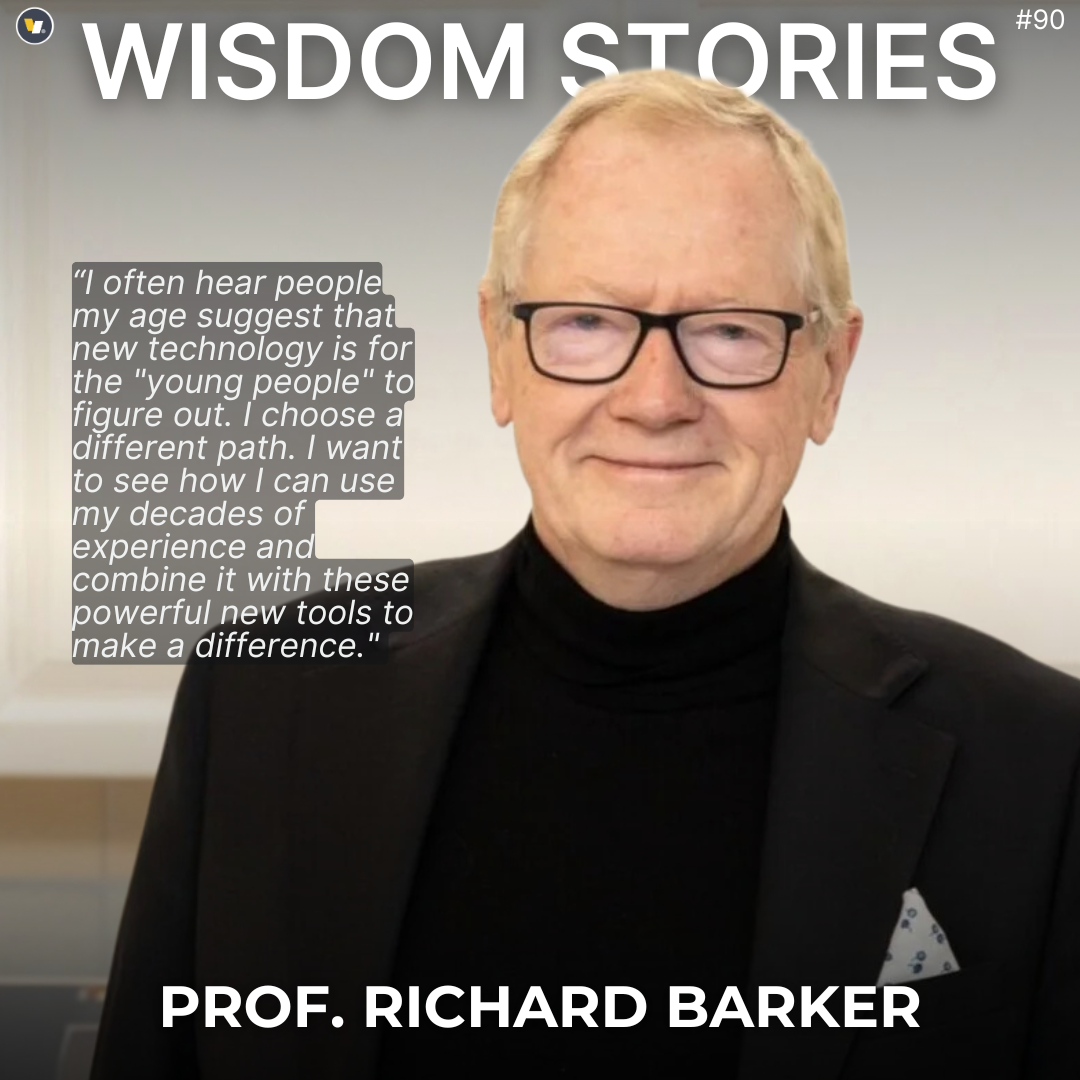
I often hear people my age suggest that new technology is for the “young people” to figure out. I choose a different path. I want to see how I can use my decades of experience and combine it with these powerful new tools to make a difference.
As I’ve become more involved in the field of “healthy longevity,” I’ve realised that extending life is meaningless if we don’t know how to use that extra time. For me, the strategy for a vibrant life is simple:
- Stay Vigorous: Whether it is walking in the Himalayas or (as I will be soon) hiking in Madeira, physical activity keeps the mind fresh.
- Keep Learning: Upskilling and continuous learning are the best defences against a “mushy” brain.
- Don’t Give Up Too Soon: I have sometimes given up on situations too quickly. I’ve learned that being a bit more “obstinate” and determined often leads to the greatest rewards.
- Distinguish Your Influence: Wisdom is knowing the difference between what you can change and what is simply “the news” for others to figure out. Focus your energy where you can make an impact.
I believe our later years are not for “retiring from life,” but for moving into roles as advisors, mentors, and influencers. We have accumulated a lifetime of stories; it is our job to share them, to teach, and to keep chasing new horizons.”
Interviewed by Nehal Naik for WisdomCircle
Explore more inspiring journeys—read more Wisdom Stories here.


